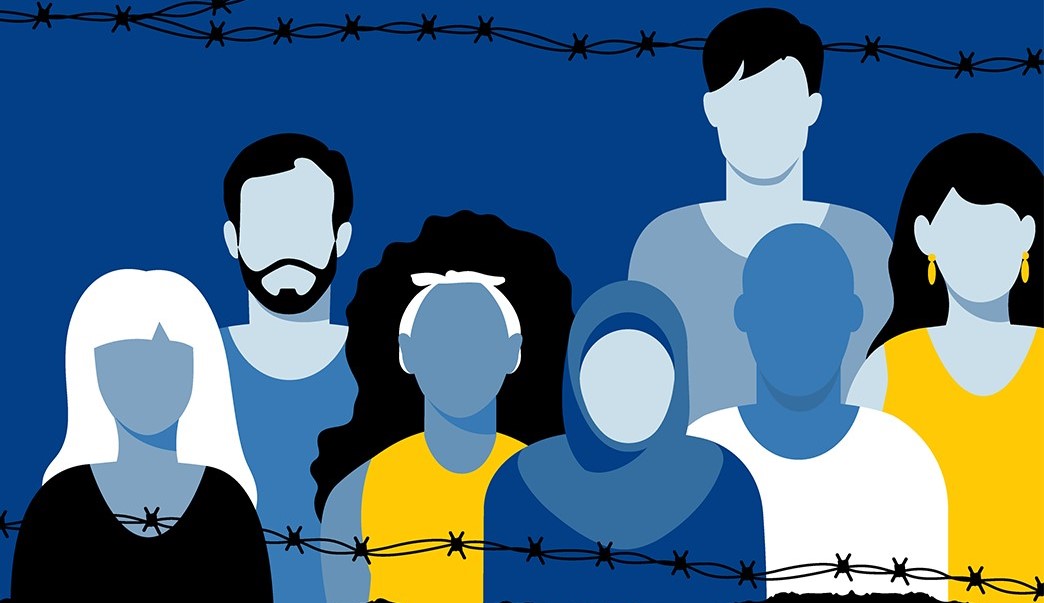
TBILISI — In recent years, dozens of Georgian citizens have found themselves ensnared in webs of forced labor and sexual exploitation far from home. Despite aggressive legislative measures taken by the state, Georgian trafficking victims continue to surface beyond the nation’s borders—victims often lured by deceit or vulnerable due to a lack of information.
What follows is an analysis of the current landscape, the mechanisms of deception, and the critical knowledge required before emigration.
A Tragic Reality Check
The story shook the public conscience: a young woman from Tbilisi, driven by the promise of employment abroad, boarded a plane with high hopes. Instead of a job, she landed in a nightmare of forced labor and sexual exploitation.
She is one of many Georgian women who, seeking a better life, left the country only to be deceived and absorbed into a trafficking network. Her story is not an anomaly; it is a harrowing echo of numerous similar cases that have come to light in recent years.
The Scope of the Crisis: Official Data (2021–2023)
According to the latest reports from the U.S. Department of State, Georgia maintains its Tier 1 status, indicating the government’s serious commitment to combating trafficking. However, the figures regarding investigations and victim identification remain volatile.
| Year | New Investigations | Officially Identified Victims | TIP Rating |
| 2021 | Data N/A | 4 | Tier 1 |
| 2022 | 19 | 2 | Tier 1 |
| 2023 | 18 | 17 (3 sex trafficking, 13 labor, 2 undefined) | Tier 1 |
Key Developments from the 2024 Report Context:
- Proactive Policing: Law enforcement inspected 100 high-risk establishments, including bars, hotels, bathhouses, and casinos.
- Labor Oversight: Labor inspectors interviewed 380 individuals identified as being at risk of labor trafficking.
- Expanded Reach: The Ministry of Internal Affairs and mobile task forces interviewed 421 individuals (a significant increase from just 60 in 2022).
- Justice Served: Courts delivered sentences ranging from 4 to 15 years in prison.(Source: U.S. Department of State – 2024 Trafficking in Persons Report: Georgia)
The 2024 Landscape: An Evolving Picture
Note: Statistical data for 2024 is currently partial; comprehensive figures will be released in upcoming reports from the Prosecutor General’s Office and the Ministry of Internal Affairs.
- New Domestic Investigations: Exact figures pending (TIP 2024).
- Victim Identification: Process ongoing.
- Georgian Victims Abroad: Cases have been documented in Germany, Greece, Italy, Turkey, and Iran. While exact numbers remain fluid, the geographic spread indicates a transnational challenge (Source: GRETA/Council of Europe Report 2024).
- Current Status: Georgia retains Tier 1 (Full Compliance) per the U.S. State Department.
Decoding “Tier 1”: A Badge of Effort, Not Perfection
The U.S. Department of State’s annual Trafficking in Persons (TIP) Report categorizes nations into four tiers based on their counter-trafficking efficacy.
- Tier 1: The country fully meets international standards for combating trafficking (legislation, investigation, victim protection, prevention).
- Tier 2 / Watch List: Partial compliance with visible progress, or countries at the tipping point of deterioration.
- Tier 3: Non-compliance with no significant effort to improve; these nations may face sanctions.
Critical Context: Georgia has held Tier 1 status for several years. This recognition highlights the state’s successful institutional mechanisms, but it does not imply the absence of the problem. It signifies that the government is actively fighting a persistent crime.
The Anatomy of the Trap
Experts identify a recurring pattern. Citizens frequently migrate for work to Greece, Turkey, Poland, or Israel based on unverified verbal agreements.
The Scheme:
- ** The Lure:** An employer or intermediary promises high wages and excellent conditions.
- The Blind Signature: The citizen signs a document in a foreign language they do not understand.
- The Reality: Upon arrival, the conditions bear no resemblance to the promises.
“Victims of trafficking often do not realize they have been deceived until it is too late—until they lose possession of their identification documents and their freedom of movement,” notes an analyst from the Ministry of Internal Affairs.
Pre-Departure Protocols: A Survival Guide
To mitigate risks, experts advise the following non-negotiable steps before emigration:
- The Paper Trail: Demand a written contract in Georgian or a certified translation. Never sign what you cannot read.
- Verify the Employer: Cross-check the company on the Georgian Labor Inspection website.
- Protect Identity: Never mail or hand over your passport to anyone prior to travel.
- Know Your Safe Haven: Identify the location and contact details of the nearest Georgian embassy or consulate.
- Consult Experts: Speak with human rights organizations before departure.
“An informed citizen is the most protected citizen,” emphasizes lawyer Nino Makharashvili.
A Darker Horizon: Organ Removal and Reproductive Exploitation
While labor and sexual exploitation remain the dominant forms of trafficking, newer, more insidious trends are emerging.
Organ Harvesting: A Rare but Rising Global Threat
According to the 2024 TIP Report, trafficking for the purpose of organ removal remains rare but is becoming increasingly difficult to detect.
- Global Stats (UNODC 2008–2022): Represents roughly 0.2% of detected victims (approx. 700 cases, though likely underreported).
- Targets: Kidneys are the primary target, followed rarely by the liver, corneas, and skin.
- Hotspots: North Africa and the Middle East.
- Precedent: In 2023, the UK saw its first conviction for organ trafficking involving a Nigerian man brought to London for a kidney harvest (BBC/Crown Prosecution Service).
The Georgia Connection: The “Egg Trafficking” Investigation (2025)
In early 2025, a transnational investigation was launched by Georgia and Thailand regarding a suspected trafficking ring involving the coercion of women for egg (oocyte) harvesting.
International media outlets, including Reuters, Newsweek, and ABC, reported that Thai women were allegedly lured to Georgia under false pretenses. They were subjected to reproductive procedures without valid contracts and under insufficient medical supervision.
“The women were told they would have contracts and a safe environment, but in reality, they saw neither agreements nor their employers,” reports Newsweek.
While three women have been repatriated, the investigation is active. Under international law, this constitutes human trafficking, as it involves the exploitation of the human body for financial gain.
Conclusion: Information as a Lifeline
Every case of trafficking serves as a grim reminder that emigration must not be an act of desperation, but of calculation. An informed decision is often the difference between a new beginning and a loss of freedom.
Help is available. Often, a single call to the appropriate agency is the decisive step that saves a life.
This article was compiled using data from UNICEF, the Public Defender of Georgia, the U.S. Department of State 2024 TIP Report, the Ministry of Internal Affairs of Georgia, GRETA (Council of Europe), and international media reports.