Robert Břešťan, HlídacíPes.org
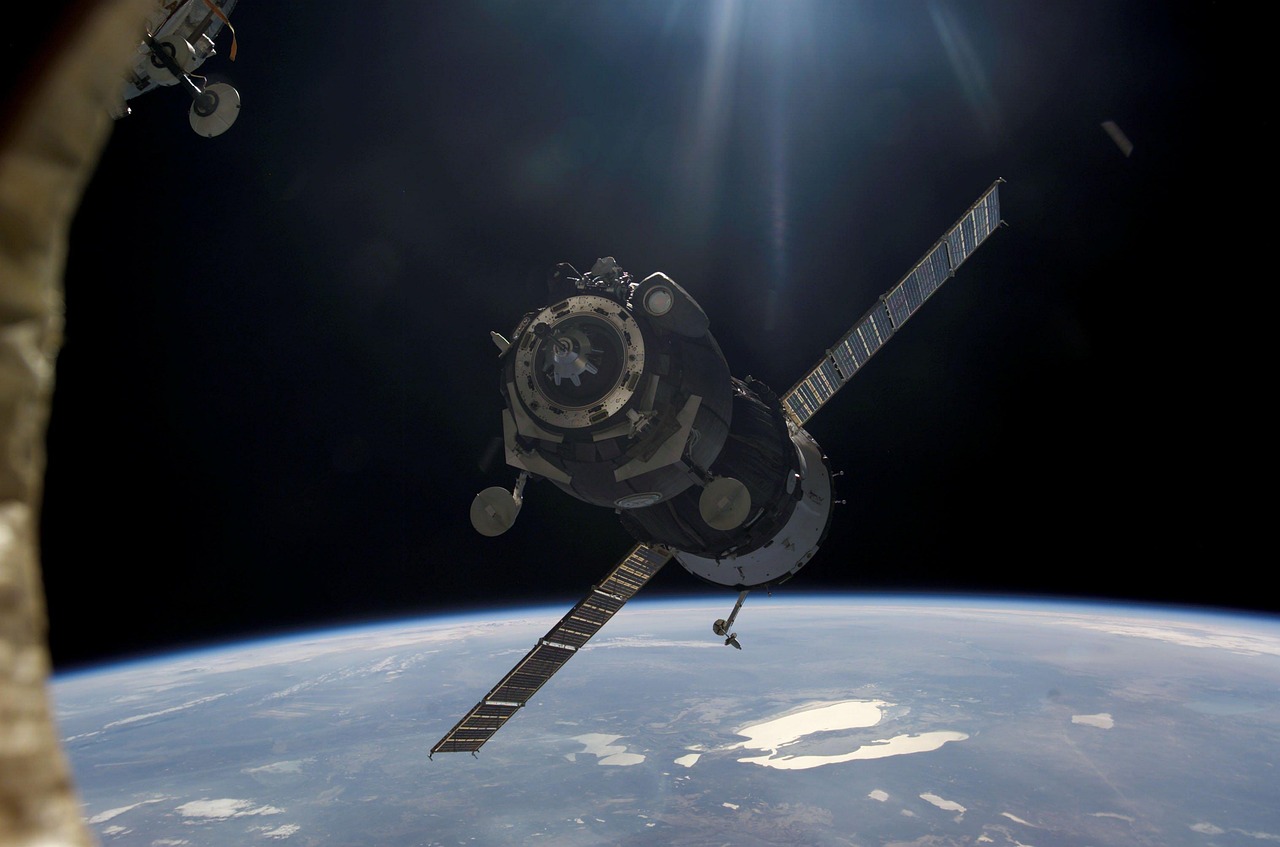
In June, the European Commission unveiled its own Space Law, aiming to unify rules for space activities across the EU, enhance safety, and bolster “the global standing of Europe’s space sector.” The legislation tackles critical issues like space debris and the cybersecurity of satellites.
Over the past 15 years, space has become a hub for exciting commercial ventures, as exemplified by Elon Musk’s SpaceX. Until now, the EU has lacked unified regulations for “space business.” This new regulation seeks to change that.
“It’s designed to make life easier for companies operating in space—those launching objects or satellites, using their data, and so on—by standardizing rules,” says Kamil Blažek, a partner at the law firm Kinstellar, in the podcast Brussels Harvest, which highlights new EU legislation. “Currently, 13 of the 27 EU member states have their own space laws, fragmenting the internal market. The EU wants to harmonize and streamline these rules.”
“This is an attempt to reboot Europe’s space capabilities and unlock the economic opportunities it offers,” he adds.
Building Europe’s Own Starlink
While the EU regulation doesn’t cover defense-related space activities, it supports the development of dual-use technologies with potential military applications. It also emphasizes cybersecurity and data protection.
“One of the main goals is to strengthen the resilience of space-related systems,” Blažek explains. “Satellites are critical to daily life, even if people don’t always realize it. Without them, navigation, internet services, timekeeping, TV signals, long-distance phone calls, weather forecasting, and more would collapse. A disruption in data transmission or a ‘space blackout’ could severely undermine our society’s resilience.”
The war in Ukraine has underscored the importance of internet coverage in remote areas, largely provided by systems like Starlink. A key EU objective is to develop its own satellite system, IRIS, which plans to deploy around 290 satellites to “reduce reliance on foreign technologies, especially amid geopolitical and cyber threats.”
The law also sets rules for managing and reducing space debris.“Anything that doesn’t fall back to Earth or burn up in the atmosphere stays in orbit,” Blažek notes. “Estimates suggest the number of objects in space could quintuple within a decade.”
Last year alone, thousands of near-collisions in space required active maneuvering to avoid disaster. Such incidents are expected to rise.The law outlines protocols for handling and safely disposing of defunct equipment.
A Treaty Over Half a Century Old
Beyond the 13 national space laws in the EU and the forthcoming European Space Law, international law also governs space activities.
“We have the Outer Space Treaty of 1967, the foundational and still the only universally recognized framework for how space should be used,” Blažek says. Drafted in the wake of the Cuban Missile Crisis to ease tensions between the USSR and the U.S., the treaty’s text is over half a century old. Despite advances in technology and growing interest in ventures like asteroid mining, no replacement treaty exists.
Ratified by 117 countries, including space powers like the U.S., Russia (then the USSR), and China, the treaty declares that space belongs to no one. However, it doesn’t define where space begins—there’s no agreed-upon altitude separating sovereign airspace from outer space.
The treaty covers the entire known universe, including planets and asteroids, prohibiting their appropriation or the placement of nuclear weapons and other weapons of mass destruction in space. It also establishes principles for peaceful cooperation, designating astronauts as “envoys of mankind.”
A 1979 treaty on the Moon and its use was signed by only a handful of countries, excluding the U.S., USSR, and China. “It’s essentially a dormant agreement,” Blažek says. In the mid-1970s, equatorial nations like Indonesia and Brazil signed the Bogotá Declaration, claiming jurisdiction over the geostationary orbit above the equator, where objects appear to hover over a fixed point on Earth. This claim gained little traction.
More recent are the Artemis Accords, bilateral agreements led by the U.S. since 2020 to support lunar exploration and commercial space use. “The Czech Republic signed on in 2023,” Blažek notes. “These accords build on the 1967 treaty, setting practical rules for commercial space activities, but major players like China and Russia haven’t agreed to them.”
Space as a Business Opportunity
The European Space Law is now under review in the European Parliament, with the European Council—where the Czech Republic’s transport ministry oversees space matters—set to take it up next. “I believe an agreement could be reached, and the law could be finalized in two to three years,” Blažek says. “It will provide a framework for business and market unification in a potentially lucrative field, which is great for Czech companies too.”
The Czech Republic is already a notable player in the space economy, with around 60 firms successfully producing and supplying space technology components.
Since 2012, Prague has hosted EUSPA, the European Union Agency for the Space Programme, a key institution in the sector.