Author: Robert Břešťan, HlidaciPes.org
When two Russian citizens – Alexander Petrov and Ruslan Boshirov – arrived in the Czech Republic in 2014, they showed up at the border with passports that were a piece of cake for the Russian military intelligence service GRU to modify. Also because they were old passports without mandatory biometric data.
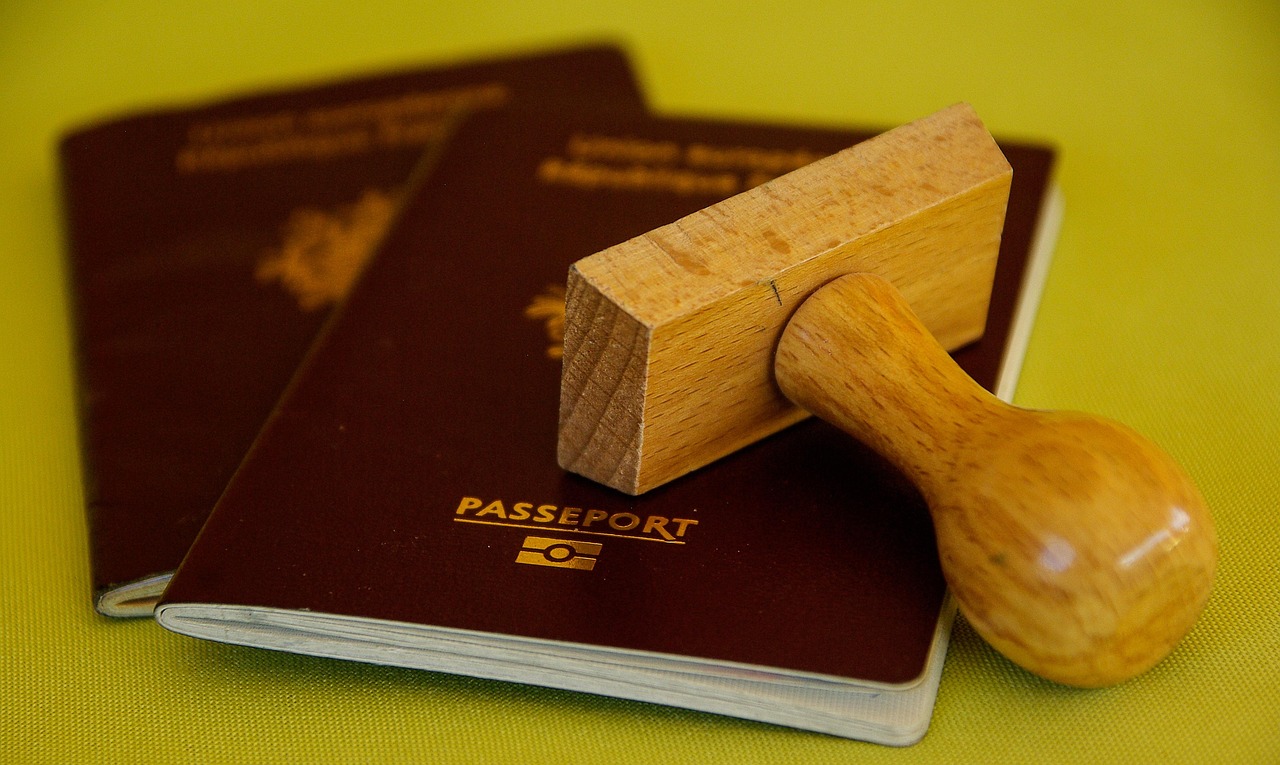
“We don’t want to make it easier for Russian spies,” explains one of the reasons why the Czech Republic will now require exclusively biometric passports from Russian citizens. That is, those that contain machine-readable data and an electronic data carrier with biometric data, which is more difficult to misuse and falsify.
As for the two men named in the introduction, they are behind the terrorist attack at the ammunition depot in Vrbětice, in which two Czech citizens died. It was only later revealed that their real names are Alexander Mishkin and Anatoly Chepiga, GRU agents.
“The Czech Republic decided not to recognize non-biometric travel documents of the Russian Federation for reasons of security and public order. Recognition of documents is a national responsibility of EU member states, and the Czech Republic is only the second country in the Union – after Denmark – to take this step. If documents do not contain biometric elements, it is much easier to alter and forge them,” explains Foreign Ministry spokesman Daniel Drake, adding that Minister Jan Lipavský “repeatedly calls on his European counterparts to introduce the same measure at meetings of the EU Council for Foreign Affairs.”
It’s about our security
The Czech Republic announced its move just a month ago, but now Russian holders of these passports who want (and can) stay on Czech territory still have a transitional period until September 15.
“If a citizen of the Russian Federation then tries to cross the external border into the Czech Republic with only a non-biometric passport, he or she will be denied entry. The exception is if this citizen also presents another document with biometric data, or if he or she is a foreigner under the age of 15,” explains spokesperson Drake.
After the start of the Russian aggression against Ukraine, the Czech Republic generally hardened its approach – and with some exceptions, it banned the issuance of visas to Russian citizens for travel to the Czech Republic. “At the same time, citizens of the Russian Federation are currently not allowed to apply for visas for the purpose of tourism, sports or culture,” the Foreign Ministry specifies.
The Czech Republic argues mainly for security reasons when banning Russian non-biometric passports. “It is in the interest of the country’s security to know whether the passport holder is really who he or she claims to be. At the same time, we see that Russia has been escalating the situation in Europe considerably in recent months and is trying to disrupt democratic societies in every way possible. Examples of this include sabotage in the United Kingdom, Poland or an arson attack on the infrastructure of the Prague transport company,” explains spokesman Daniel Drake.
The Foreign Ministry’s move was publicly supported by the director of the Czech counterintelligence agency BIS, Michal Koudelka, in an interview for Deník: “The latest decision by the Foreign Ministry that Russians can only travel to us with biometric passports is very important and strengthens the security of Czech citizens.”
The Czech Republic recently came up with another initiative that should make it more difficult for Russian agents to move around the EU. Specifically, it is an effort to limit the movement of Russian diplomats only to the country where they are accredited.
“In the long term, we propose to limit the travel of Russian diplomats within the Schengen area. This means that they should only work in the country of their posting or in the country of accreditation. I think this is in the interest of the security of the member states and the European Union as such. We are discussing this in Brussels and will continue to discuss it – both with European institutions and with key member states,” Deputy Foreign Minister Jan Marian, who is responsible for relations with Russia, previously told HlídacíPes.org.
In June this year, a letter calling for restrictions on free movement within the Schengen area for Russian diplomats was signed by eight EU foreign ministers.
The Czech counterintelligence agency BIS also pointed out that Russia has adapted to the new situation after expelling its informants operating under diplomatic cover: “Russian diplomats come to Prague from abroad on so-called business trips, usually from nearby countries, for example from Vienna, where there are a large number of Russian diplomats and informants, both thanks to the Russian embassy and the presence of international institutions. To a certain extent, they compensate for the lack of forces at the domestic embassy,” says BIS spokesman Ladislav Šticha.
However, a new agreement concluded by Hungarian Prime Minister Viktor Orbán with Russia and Belarus directly contradicts efforts to restrict and complicate the free movement of potential Russian spies within the Schengen area.
He has included both countries in the National Card program for foreign workers. Citizens of both countries will be able to register in Hungary, obtain a Schengen visa and with it the possibility of free movement in other EU countries.
“Hungary is simplifying the entry conditions for Russians and Belarusians, who will be able to move freely in other countries within a few days without any security checks. With this decision, it is once again undermining the unity of the EU and playing into the interests of the Putin regime,” commented Minister for European Affairs Martin Dvořák.
Forty thousand Russians
As of June 2024, according to the Ministry of the Interior, 24,783 citizens of the Russian Federation were permanently registered in the Czech Republic, while another 15,290 lived in the Czech Republic temporarily.
Since the beginning of the war in Ukraine in 2022, the number of Russians with permanent residence has increased slightly (in 2022 there were 23,783 Russians), while the number of temporary residents has decreased by approximately four thousand people (in 2022 there were 19,715 people with a Russian passport).
Russians who have a valid residence permit in the Czech Republic must also have a biometric passport from mid-September. In their case, the Czech Republic will no longer recognize any other passport.
“As a foreigner, you are obliged to have a valid travel document. Therefore, we recommend that you contact the relevant authorities of the Russian Federation as soon as possible and obtain a biometric travel document. If you do not have a valid travel document after September 15, 2024 and one of the exceptions does not apply to you, you may be fined,” describes the official government portal for foreigners who live or want to live in the Czech Republic.
The aforementioned exception applies to children under the age of fifteen, persons included in the Civil Society Program, and visas and residence permits granted in the interests of the Czech Republic.