Robert Břešťan, HlídacíPes.org
Sanctions are preventing Russia from repairing Airbus and Boeing airliners, with spare parts for aircraft maintenance becoming scarce commodities. The seriousness of the issue is underscored by the Kremlin’s request for the International Civil Aviation Organisation to intervene, on the grounds that the measures are “in breach of global aviation rules”. This represents an unusually candid admission that the sanctions—at least in this domain—are having a significant impact on Russia.
When US President Donald Trump recently decided to lift sanctions imposed on the Belarusian airline Belavia, the move sparked joy in Russia as well. It has raised hopes that essential spare parts for Airbus and Boeing aircraft operating in Russia could now be channelled through Belarus.
Belavia has long served as a vital conduit for Russian airlines. As reported by Reuters, the Belarusians previously purchased three worn-out Airbus aircraft from Magic Air in the Gambia and promptly forwarded them to Russia.
Attempts to manufacture alternatives
Since February 2022, Russia has been officially barred by sanctions from purchasing either aircraft or Western-made spare parts. The country has largely resorted to cannibalisation—stripping parts from one aircraft to service others—but this cannot continue indefinitely.
“Export controls have forced Russia to dismantle aviation components and other equipment that it can no longer obtain from abroad,” the Czech Ministry of Foreign Affairs has noted in describing the sanctions’ effects.
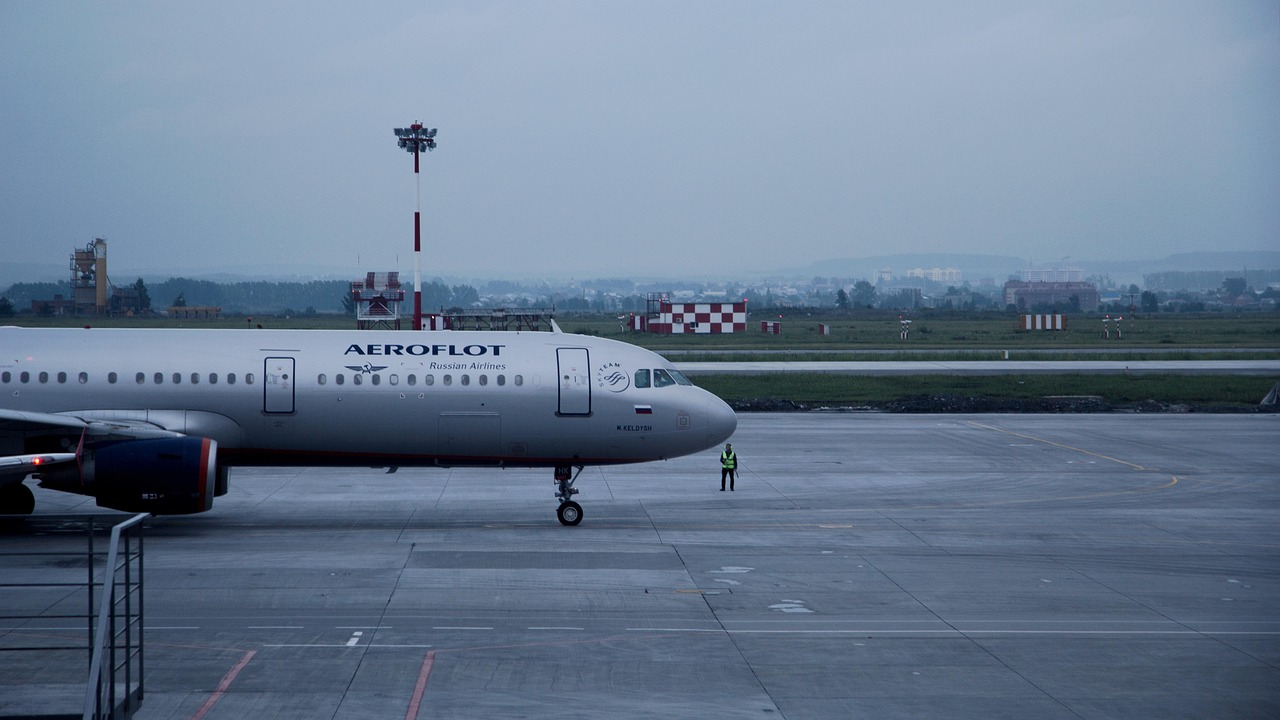
Russia’s flagship carrier, Aeroflot, until recently operated a fleet of more than 700 Airbus and Boeing airliners. Estimates suggest that by the end of this year, up to a third of these could be grounded for parts.
“According to our pessimistic forecast, in collaboration with airlines, we anticipate the loss of around 339 aircraft by 2030. This includes 230 domestic aircraft, some aged 40, 50 or 60 years, and 109 foreign ones. In addition, we plan to retire 200 helicopters—190 domestic and 10 foreign,” Dmitry Yadrov, head of the Federal Air Transport Agency (Rosaviatsiya), stated recently.
Russia is attempting to circumvent the sanctions through black-market imports via third countries such as the United Arab Emirates, Turkey, China, India and certain African states.
It is sourcing whatever it can—from engines to seats—but the parts are many times more expensive and their quality cannot be guaranteed. Even this falls short of meeting all needs. Experts in the field say Russia is therefore trying to develop its own replacement parts.
This, however, heightens the risks of failures and accidents. Data from 2024 show more than a doubling of engine failures on Boeing and Airbus aircraft in Russia.
The Collapse of Russia’s Aviation Industry
Although Russia has a long tradition of producing its own aircraft, production has fallen far short of Moscow’s promises and commitments.Official Russian sources, including Deputy Prime Minister Denis Manturov, claim that Russia is “the only country producing all components” and is supposedly “close to full self-sufficiency” in aviation.
Reality paints a different picture.The contrast with Western manufacturers is stark. In August 2025, Boeing delivered 385 aircraft to the market and Airbus 434; Russia completed just one.In June 2022, Russian government officials solemnly pledged to airlines and passengers that at least 1,000 new aircraft could be expected.
Take the Il-96-400M, intended as a home-grown rival to Boeing and Airbus: there is no interest in it even within Russia, and according to an article in the September issue of the magazine Letectví a kosmonautika, “the project has lost support from Russian ruling circles”. Only one example has been built to date.
“The days when the Soviet aviation industry produced virtually all its airliners—and supplied them to the socialist bloc and some Third World carriers—are irrevocably gone,” comments Libor Dvořák, a Russia expert and commentator. Soviet-era aircraft are ageing and plagued by problems.
In 2024 alone, 208 aviation incidents were recorded—a 25 per cent increase on 2023. In late July this year, for instance, a 1976 Antonov An-24 operated by Siberia’s Angara Airlines crashed in the Russian Far East, killing all 48 people on board.
The incident prompted discussion in Russia itself about the dire technical condition of some aircraft.The Kremlin is also aggrieved that the EU has denied all Russian carriers access to its airports and banned them from overflying its airspace.
It has lodged a complaint about this with the International Civil Aviation Organisation—without success.The prohibition remains in force: aircraft registered in Russia, along with private jets merely leased to Russian citizens or entities, are barred from landing at EU airports or flying over EU territory.