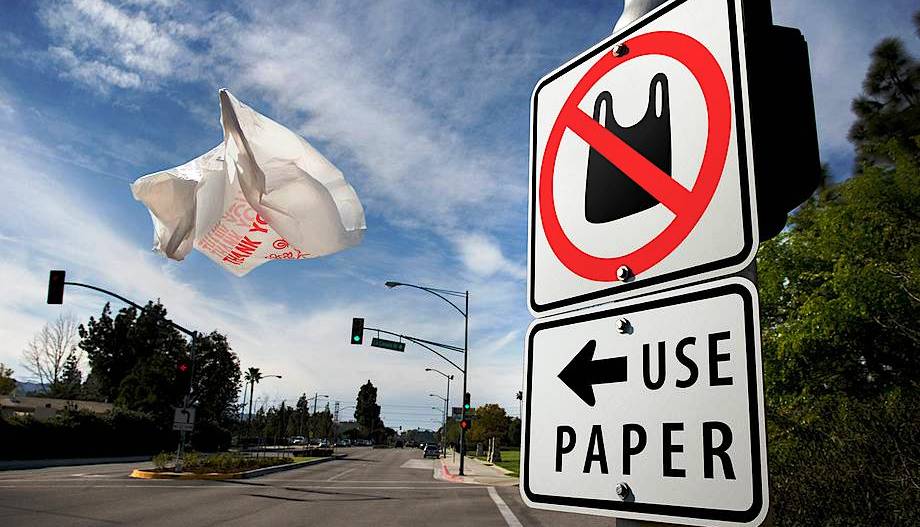
We have all seen them – in cities and villages alike – plastic bags hanging from trees, tangled in bushes along roadsides, clinging to riverbanks, or simply “flying” in the air. This is not unique to Georgia. Polyethylene bags and plastic bottles are a major environmental problem worldwide. Because of their chemical composition, plastic bags remain in nature for centuries. They are not biodegradable and are extremely difficult to break down. During this slow degradation process, they release toxic substances that pollute soil and groundwater, enter the food chain and pose a real threat to living ecosystems. Carried by the wind, these toxins are easily transported into rivers, seas, lakes and forests.
Plastic bags are harmful to human health as well. They release chemical compounds that negatively affect the human body and disrupt normal hormonal function. Burning plastic is also dangerous: during combustion, hazardous toxins are released into the atmosphere, contributing to air pollution. This process also intensifies the greenhouse effect and thus influences global climate change.
Statistics show that more than one million plastic bags are discarded every single second worldwide, and each of these bags can persist in the environment for more than a thousand years.
What Does the Public Know About It?
“Fortuna” set out to find out how informed the population is about the negative impact of polyethylene.
In the opinion of Nino Adamashvili, plastic bags are indeed a serious concern. Beyond the fact that “flying bags” on windy days are an eyesore and distort the urban landscape, she believes they are dangerous both for children’s health and for nature:
“Plastic bags remain in the soil for years and practically do not decompose. It’s terrible from every angle. We would be very happy if the state and businesses took real action and concrete steps to protect future generations from numerous diseases and to safeguard the environment,”
— Nino Adamashvili, speaking to “Fortuna”.
Keti Gomarteli, in conversation with us, highlights the lack of information as a major problem:
“We lack a culture of proper use and disposal of plastic bags, and naturally, this harms the environment. It would be good if we first worked on our own habits and, at the same time, if companies also started thinking in this direction. Clearly, awareness campaigns are needed. As far as I know, nature needs several decades to process these materials. If we learn to be more careful, to use them correctly and to dispose of them in the right bins, that would already be progress,”
— says Keti Gomarteli.
The Legal Framework in Georgia
Since 1 October 2018, Georgia has banned the production, use and import of plastic bags with a thickness of less than 15 microns. As of 1 April 2019, this regulation was extended to all types of plastic bags.
Violations are subject to fines:
- For the production, use or import of non-biodegradable plastic bags, the fine is 500 GEL for the first offence and 1,000 GEL for repeated violations.
Enforcement responsibilities are divided among several agencies:
- Manufacturers are monitored by the Ministry of Environmental Protection and Agriculture of Georgia through its Department of Environmental Supervision;
- Importers fall under the oversight of the Ministry of Finance;
- Retailers and distributors are supervised by local self-government bodies (municipalities).
Oxo-biodegradable bags are also banned. These are essentially the same plastic bags but formulated to break down into smaller fragments, which in practice creates even more environmental problems. Under a new biodegradability standard, fully aligned with relevant EU standards, only those bags that comply with the certified criteria are permitted. If a so-called biodegradable bag does not meet these standards, its import and sale in Georgia is prohibited.
Regulations were further expanded in 2023.
The business sector was actively involved in drafting the new technical regulation: plastic importers, domestic manufacturers of polyethylene bags, and major supermarket chains all participated in multiple rounds of consultation.
How Much Plastic Is Imported?
(According to the National Statistics Office of Georgia)
2019
- 1,950.28 tons
- Total value: USD 4,189,390
2020
- 1,732.54 tons
- Total value: USD 3,463,430
2021
- 2,074.42 tons
- Total value: USD 4,534,390
2022
- 2,549.22 tons
- Total value: USD 5,465,560
2023
- 3,045.82 tons
- Total value: USD 6,163,060
The main import partners are Iran and Turkey.
According to the latest data, the top three importing countries are:
- Iran – 424.64 tons, worth USD 809,110
- India – 56.81 tons, worth USD 88,220
- Azerbaijan – 49.66 tons, worth USD 143,200
As for enforcement inside the country, the Tbilisi City Hall issued only 10 fines in 2024 for illegal sale or use of plastic bags. The Municipal Inspection carries out periodic monitoring.
- In 2022, 40 fines were issued;
- In 2023, 48 fines;
- In 2024, only 10 fines.
According to the City Hall, violations have significantly decreased in chain stores, large supermarkets, medium and small markets and shops.
Taxation or a Ban – Which Works Better?
International experience shows that results vary depending on context. In some countries, taxation systems have proved successful, while in others, full bans have been more effective.
Denmark and certain U.S. states have successfully introduced plastic bag taxes. Denmark is a pioneer in this area: it was the first country to introduce a tax on plastic bags back in 1994. After the tax was introduced, the annual consumption of plastic bags fell by half — from around 800 million to 400 million bags per year.
In Washington, D.C., a tax on plastic bags was introduced in 2009, and the impact was rapid. Monthly usage decreased by 85%, from 22.5 million to 3.3 million bags.
On the other hand, Bangladesh and China opted for a ban-based strategy. Bangladesh was the first country in the world to ban plastic bags, doing so in 2002. However, the ban did not achieve the desired level of success, mainly due to weak enforcement mechanisms.
China’s approach produced far better results. In 2008, China banned ultra-thin plastic bags and restricted free distribution of all others. After the ban, plastic bag consumption fell by 66%. It is important to note that Chinese companies faced heavy fines — up to 10,000 yuan (around USD 1,600) — for illegal production and distribution of plastic bags.
The lesson from international practice is clear: both bans and taxes can be effective, but only in countries where enforcement and monitoring systems are robust and consistent.
Plastic Bags and Europe
Since 2020, France has enforced a law that bans all types of single-use plastic products. A similar situation exists in the United Kingdom. In Latvia and Denmark, plastic bags are still available, but consumers must pay a tax when they use them.
When you travel, it is important to check whether you are carrying plastic bags or other plastic items in your luggage. In countries that actively promote environmental sustainability, such bags are restricted or banned, and violators may face significant fines.
In many EU countries, various types of plastic bags are either banned or heavily discouraged:
- In Italy, most supermarkets provide biodegradable packaging or other alternatives.
- In Belgium, there is a total ban on many polyethylene products.
- In Ireland, plastic bags are banned and usage has dropped by 94%. The Irish have largely switched to reusable cloth bags or string bags.
In Germany, plastic bags may still be available in shops, but they are subject to high recycling or environmental fees.
Across the EU, the number of thin plastic bags used annually had reached a staggering level: by 2022, consumption stood at around 30 billion bags per year.
Experts note that Europe now uses one-third fewer bags than in 2018. Despite this positive trend, there is still room for improvement.
- Lithuania has the highest per capita consumption — 249 bags per person per year.
- It is followed by Latvia (193) and the Czech Republic (185).
At the other end of the spectrum:
- Belgium has the lowest consumption — just 4 bags per person per year;
- Poland and Portugal also have relatively low figures: 7 and 13 bags per person annually, respectively.
Who Is Banning Plastic — and How Strictly?
According to UN data, up to eight million tons of plastic end up in the world’s oceans every year, causing mass death of marine species. To halt this process, an increasing number of countries are legally banning single-use bags — and travelers need to be aware of these restrictions. There have already been many cases where even a simple shopping bag used for carrying clothes has led to a fine.
Australia, Kenya, South Africa and Taiwan are among the countries with particularly strict laws against plastic.
For example, Kenya has completely banned the import, production and use of plastic bags. This directly affects tourists as well: anyone who ignores the law must be prepared to pay between USD 19,000 and 39,000 in fines and face up to four years in prison.
Despite the seemingly extreme harshness of these penalties, the UN has endorsed Kenya’s legislation, which empowers the police to detain anyone found carrying plastic packaging.