Author: Vojtěch Berger, HlidaciPes.org
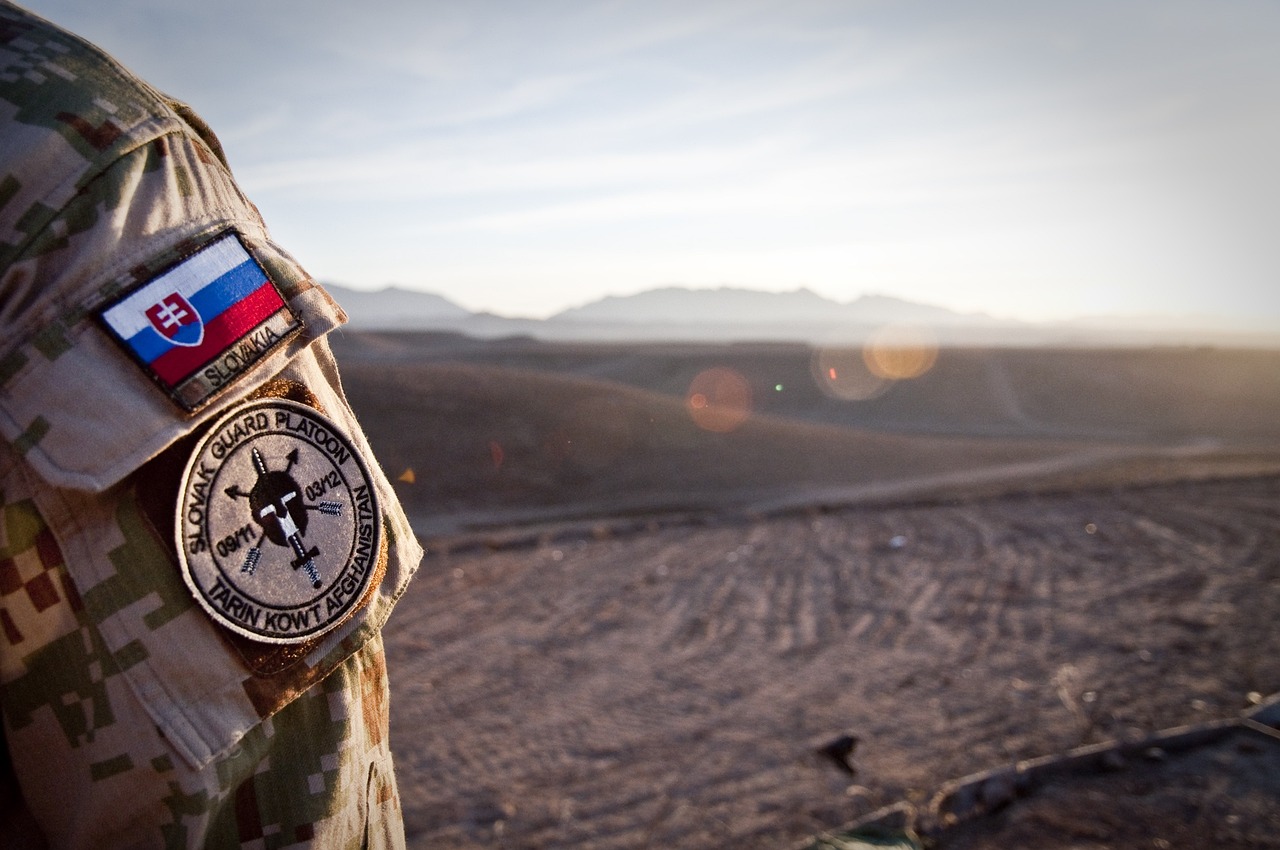
An amendment to the Military Police Act in the Czech Republic will tighten penalties for the unauthorized wearing of military uniforms starting in July. The change is mainly aimed at associations such as the „Národní domobrana“ (National militia or self-defence), whose members wear camouflage uniforms at demonstrations, giving the false impression that they belong to the Czech army. The militia wants to deal with the new rules by purchasing discarded uniforms from Slovakia.
“We used uniforms that were discarded in Slovakia, and we modified those uniforms and will all wear them nationwide,” said one of the representatives of the Národní domobrana in an interview published in early June on the YouTube channel Hlas naděje (Voice of Hope).
According to the Military Police, however, the foreign origin of the uniform is not in itself sufficient to meet the legal requirements for wearing a uniform. The key factor is the risk of confusion with the Czech version of the uniform worn by members of the armed forces or other security forces.
“If the uniform — regardless of its origin or modifications — is easily confused with the official uniform of the Czech Armed Forces when appearing in public, such conduct may be assessed as unauthorized wearing of a uniform within the meaning of the relevant provisions of the law, including possible penalties,” summarizes Kateřina Mlýnková, spokesperson for the Military Police, in response to a question from HlídacíPes.org.
Pro-Russian, closed-minded, marginal
Members of the militia, which the Ministry of the Interior classifies as an extremist group, regularly appear in uniform at various demonstrations and other public events. They are often associated with the pro-Russian or disinformation scene.
“The social harmfulness of such behavior is increasing at a time of heightened international tension and Russian aggression in Ukraine. This is also taking into account the good reputation of Czech soldiers who are involved in strengthening NATO’s eastern border defenses or in foreign peacekeeping operations,” the Ministry of Defense previously explained the tightening of penalties for unauthorized wearing of uniforms.
The upper limit of the fine for unauthorized wearing of uniforms will increase to CZK 50,000 (EUR 2,000). However, the Ministry of Defense has previously reassured that fishermen or hikers who often wear camouflage clothing in nature, for example, do not have to fear punishment.
Slovakia, where, according to their own statements, Czech militiamen purchased discarded uniforms, introduced similar stricter conditions for wearing uniforms several years ago. At that time, the Slovak regulation was aimed mainly at the Slovenskí branci (Slovak Recruits) group, which, like other militia groups, practiced combat techniques and prepared for a possible armed conflict.
When war actually broke out in 2022 after Russia’s invasion of Ukraine, right next door to Slovakia, the Slovak Recruits paradoxically announced that they were disbanding their organization.
The head of the association, Peter Švrček, underwent military training in Russia. The recruits also cooperated with the Slovak branch of the pro-Kremlin motorcycle club Night Wolves. Indirect references to the organization have also appeared in the annual reports of the Slovak secret service SIS for a long time.
The Czech militia Národní domobrana also appears in reports of the Czech Ministry of the Interior on extremism and hate speech. However, the latest report for 2024, which was approved by the government in May this year, states that militia groups “represent a very limited and closed subculture with a minimal impact on society.”
Outside the law? It depends on the context
“A significant portion of the militia is strongly influenced by various conspiracy theories. Ideologically, they are anti-democratic; for example, most sympathize with Putin’s regime in the Russian Federation,” writes the Ministry of the Interior, estimating the total number of militia members at around 100.
The Military Police points out that for wearing a military uniform in public to be against the law, it must be accompanied by other disturbances of public order.
“In practice, this could be a situation where a person unlawfully wears a military uniform while participating in public events, such as demonstrations, and through their further actions and behavior disparages the armed forces, calls for disrespect for the law, and otherwise acts against public order,” explains spokesperson Mlýnková.
Only practice will show whether the Slovak uniforms of the Czech self-declared militia will fall under the law: “The assessment of specific cases will always depend on the context, purpose, and degree of similarity to the original uniform. In case of doubt, the legitimacy and legality of such conduct will be reviewed by the competent authorities,” summarizes the Military Police.