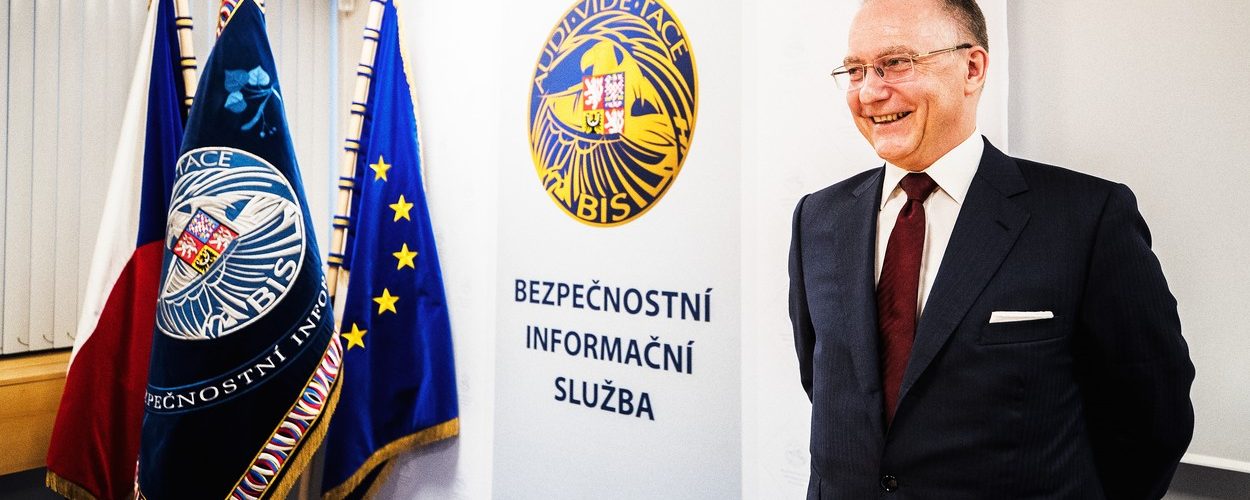
Author: Robert Břešťan, HlídacíPes.org
Following the Velvet Revolution of 1989, Russia maintained extensive networks across Czechoslovakia—and later the Czech Republic—spanning media, business, and politics, skillfully leveraging these connections. “It was tough to counter,” admitted former and current Czech intelligence officials during a rare meeting in the Chamber of Deputies. Fortunately, they noted, the situation has since changed.
Michal Koudelka, the current director of the Czech Security Information Service (BIS), joined counterintelligence in 1992. “It was a time of building and learning; the agency was finding its footing in the somewhat chaotic 1990s,” he recalled, describing an era when former State Security (StB) officers who passed screenings worked alongside dissidents and eager young recruits.
Speaking at a public conference on the transformation of intelligence services post-1989, Koudelka noted that, even years after the revolution, the public still associated the BIS with “StB agents who had ruined lives.”
No Longer Calling Russia the Enemy
Koudelka vividly remembers the lack of confidence among BIS officers when facing Russian intelligence services.
“Back then, the belief was that you couldn’t beat the Russians—they were better, more capable, and knew everything. That wasn’t true. We stood up to this adversary, succeeded, and now know we can effectively counter them. Today, we’re a strong, respected service and a reliable partner to Western agencies—the kind of intelligence service we dreamed of 30 years ago,” he said.
“For those of us focused on internal security, we’ve been fighting for years—against extremism, terrorism, proliferation, and the influence of Chinese and Russian intelligence. The BIS has its fallen heroes who gave their lives for this country,” Koudelka emphasized, though neither he nor BIS spokesperson Ladislav Šticha provided further details.
On Russia specifically, Jan Paďourek, a former deputy director for analysis at the Czech foreign intelligence agency (ÚZSI) and now a senior official at the Ministry of the Interior, recalled perceiving Russia as a threat from the start of his career in 1992.
Jiří Růžek, who led two Czech intelligence agencies—Military Defensive Intelligence (1994–1999) and BIS (1999–2003)—noted that in the early 1990s, Czech political leaders “refused to hear the word ‘enemy.’” “We were building a department focused on Russia, but there was no political support for it,” he said.
Turning Point: NATO Accession
Koudelka highlighted that Russia’s significant presence in the Czech Republic persisted from 1989 until the public exposure of the Vrbětice ammunition depot explosions, which led to the expulsion of most Russian embassy staff and the closure of consulates in Brno and Karlovy Vary.
“Initially, Russians operating in the Czech Republic didn’t see us as enemies, perhaps out of habit. That changed when we joined NATO—they labeled us enemies and traitors almost overnight,” Koudelka clarified.
The NATO accession also tied into a lesser-known scandal recalled by Libor Kutěj, a longtime senior officer in Military Intelligence and now director of the Intelligence Studies Institute at the University of Defence in Brno:
“The intelligence arm of Military Intelligence remained unreformed for years, resembling the 1950s in some ways. A major scandal erupted when one of our case officers was caught in a Western country passing funds to a person of interest to gather information on NATO—an organization we were about to join.”