Author: Robert Břešťan, HlídacíPes.org
With a bit of effort, most people could probably name at least one product they suspect might come from Russia. But the list wouldn’t be long. Beyond items like caviar or vodka, you might think of somewhat outdated cars like Lada or UAZ. So, what products labeled “Made in Russia” can still be bought in the Czech Republic (and likely elsewhere in Europe)—despite sanctions and Russia’s war against the “collective West”?
A glance at the bottom of a sturdy glass bought years ago from the Swedish retailer IKEA leaves no doubt about its Russian origin. Or rather, its former Russian origin.
Many European households still have a few Russian-made products in their kitchens, such as the Pokal glass series. However, production of these glasses has since shifted from Russia to Bulgaria.
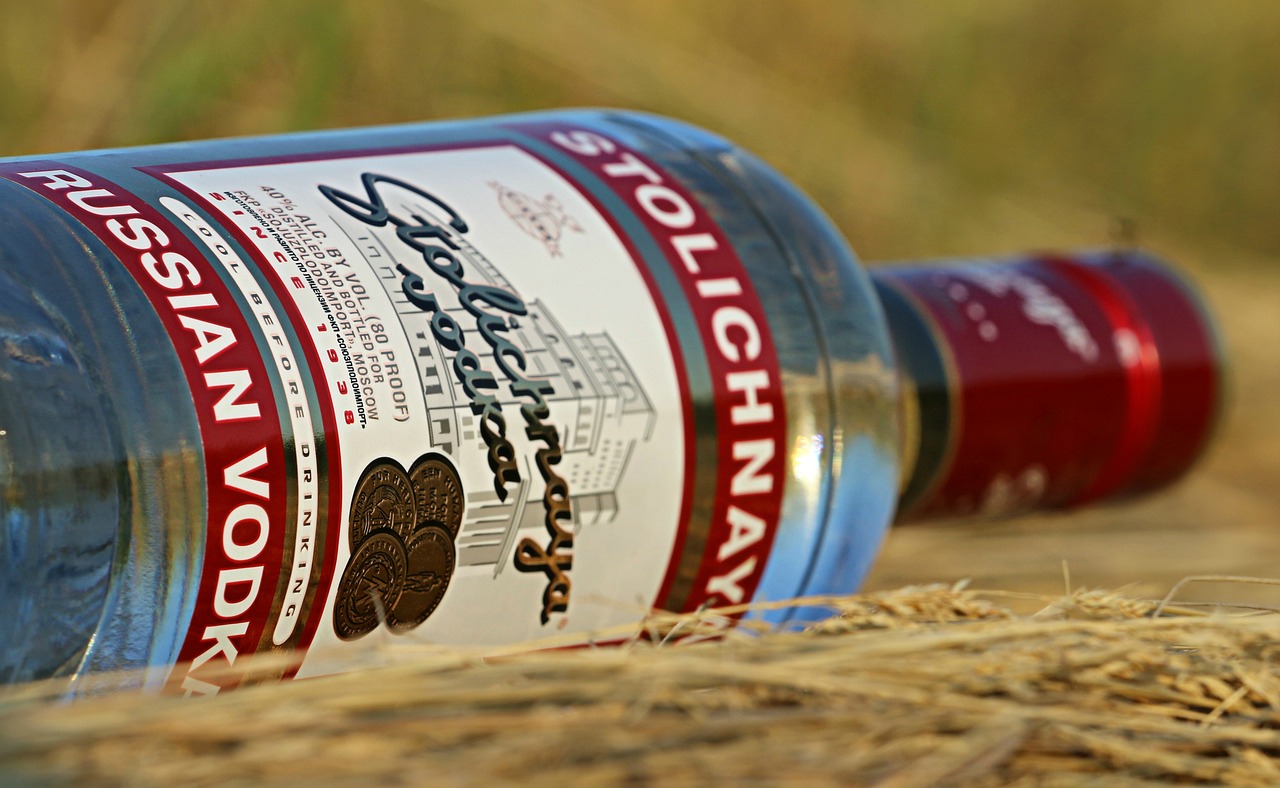
When it comes to what’s poured into those glasses, vodka naturally comes to mind in connection with Russia. There’s still plenty of vodka with Russian roots on the European market, even though the EU’s sixth sanctions package, enacted in June 2022, bans the import of “spirits, liqueurs, and other alcoholic beverages” from Russia.
Dominik Berdych, founder and majority owner of Alkohol.cz, a major Czech online alcohol retailer, explains that after the war began, his company halted sales of all Russian-origin bottles.
“We only resumed purchasing later, once many brands started producing in Europe. For example, Russian Standard is now made in Italy, Beluga in Montenegro, and so on. After the return of these brands, now bottled in the EU, sales are getting back to pre-war levels,” Berdych told HlídacíPes.org in response to their inquiry.
Buying authentic Russian caviar in the Czech Republic is also no issue, even though it’s explicitly covered by EU sanctions.
The State Agricultural and Food Inspection Authority is legally responsible for monitoring the import and sale of sanctioned Russian goods. “If there’s suspicion that goods on the sanctions list were imported after June 4, 2022, when these products were added to the list, we file a report with the Financial Analytical Office for a potential violation of the law on implementing international sanctions,” said Karla Mráčková, spokesperson for the Ministry of Agriculture.
According to her, sanctioned goods from the Russian Federation are not imported directly into the Czech Republic. “However, importing through third countries can also be classified as sanctions evasion,” she added.
Tomáš Prouza, president of the Czech Trade and Tourism Association, describes the typical workaround for getting sanctioned Russian goods into the country: “If someone is willing to repackage the goods along the way, customs officials have no chance of catching it, because it will appear not as Russian but, say, Belarusian, Moldovan, or some other origin not subject to sanctions.”
Watches with Stalin’s Face
Cheap goods, primarily from former Soviet countries including Russia, are sold in the Czech Republic by the discount chain Mero, which operates in a somewhat rough and unpolished environment. As HlídacíPes.org previously reported, the company had planned significant expansion before February 2022, aiming to open up to 50 new branches in the Czech Republic.
In 2021, it opened two stores in Most and Příbram, followed by one in Písek, another in Plzeň last November, one in Jihlava this year, and most recently one in Karlovy Vary.
“It’s a minor player, about the size of a local small business. In the context of the food retail market, it’s negligible, but if someone had ulterior motives, it could, for example, be a great tool for money laundering,” Prouza noted.
The stores are operated by the Russian company Svetofor, whose parent company, Torgservis, is one of the largest discount retail operators in Russia. It is owned by brothers Sergey and Andrey Schneider—men of German descent who have long lived in Russia, in the Siberian city of Krasnoyarsk.
As reported by iDNES.cz, the brothers are now actively doing business with the Russian military, supplying canned food and profiting from the war.
As the above suggests, there aren’t many opportunities in the Czech Republic to boycott Russian goods, even if someone wanted to. Just two days after Russia launched its war against Ukraine in February 2022, the Association for Electronic Commerce (APEK) called on all online retailers in the Czech Republic and Europe to “consider what goods they offer in their e-shops and who their producers or suppliers are.”
“APEK fully supports the current efforts of Czech online stores that are already removing Russian goods from their offerings,” the association’s press release stated at the time.
“At the start of the conflict, many e-shops responded very positively. Our members themselves wanted us to issue such a public call, and I don’t recall any negative feedback. But I’ll admit, I don’t know what the situation is now, three years into the war. We haven’t done any recent statistics on this,” said Jan Vetyška, APEK’s executive director, reflecting three years later.
A quick browse through Czech online stores reveals plenty of Russian products still available. For example, many army surplus shops sell Russian military camouflage and gear, some even with slogans like “Be like Spetsnaz” (Russia’s special forces).
You can find guaranteed authentic Russian knives, including those used by Russian armed forces, or Russian Raketa watches—second-hand ones featuring Stalin’s image, as well as new Russian-made watches.
Some brands have stopped openly acknowledging their Russian origins. Take Natura Siberica cosmetics, for instance, which, thanks to a manufacturing plant in Estonia, now markets itself as “born in Siberia, made in Europe” and “Made in Estonia.”
The Thriller Better Than Us
A uniquely Russian product is automobiles. Many Czech households in the past could boast ownership of a Lada, and while these cars are now a rare sight on the roads, they’re still around. This is partly due to the availability of spare parts.
For example, TRI-AN, a Prague-based company, sells them. “It’s not a problem to import them; it just depends on whether the part is available, especially for older models,” said a man with a strong accent on the company’s contact line.
New Lada cars are sold, for instance, by Autocentrum AMC in Kratonohy, near Hradec Králové. “Lada Niva 2025: Sales have begun!” their website proclaims, though it notes that the cars are manufactured by the Azermash Group in Azerbaijan.
Additionally, the Russian carmaker Avtovaz has reportedly announced the launch of a new utility vehicle brand. It will be sold under the SKM logo, but these too won’t be assembled in Russia—they’re part of the Chinese Shineray Group conglomerate.
The antivirus software Kaspersky also tries to downplay its Russian roots. The company assures customers it protects their data, does not cooperate with Russian authorities, and relocated its data centers to Switzerland years ago.
Nevertheless, in mid-June last year, the US administration imposed a blanket ban on the sale of this antivirus software in the US (its use in government offices had already been banned in 2017).
In the Czech Republic, the National Cyber and Information Security Agency (NÚKIB) issued a general warning about IT companies with Russian ties immediately after Russia’s invasion of Ukraine, though it didn’t name specific firms at the time.
For those determined to avoid Russian products and, say, subscribe to a streaming service like Netflix, they could skip the seven Russian-made films or series available there (including three animated shows for kids). These include the 2019 thriller Better Than Us—about a cutting-edge robot pursued by a powerful corporation, police investigators, and terrorists—or the series To the Lake, set during a “terrifying epidemic that could destroy all civilization, where people fight for their very survival.”